Wizard of Cause: An Interview with Nicholas Grooms

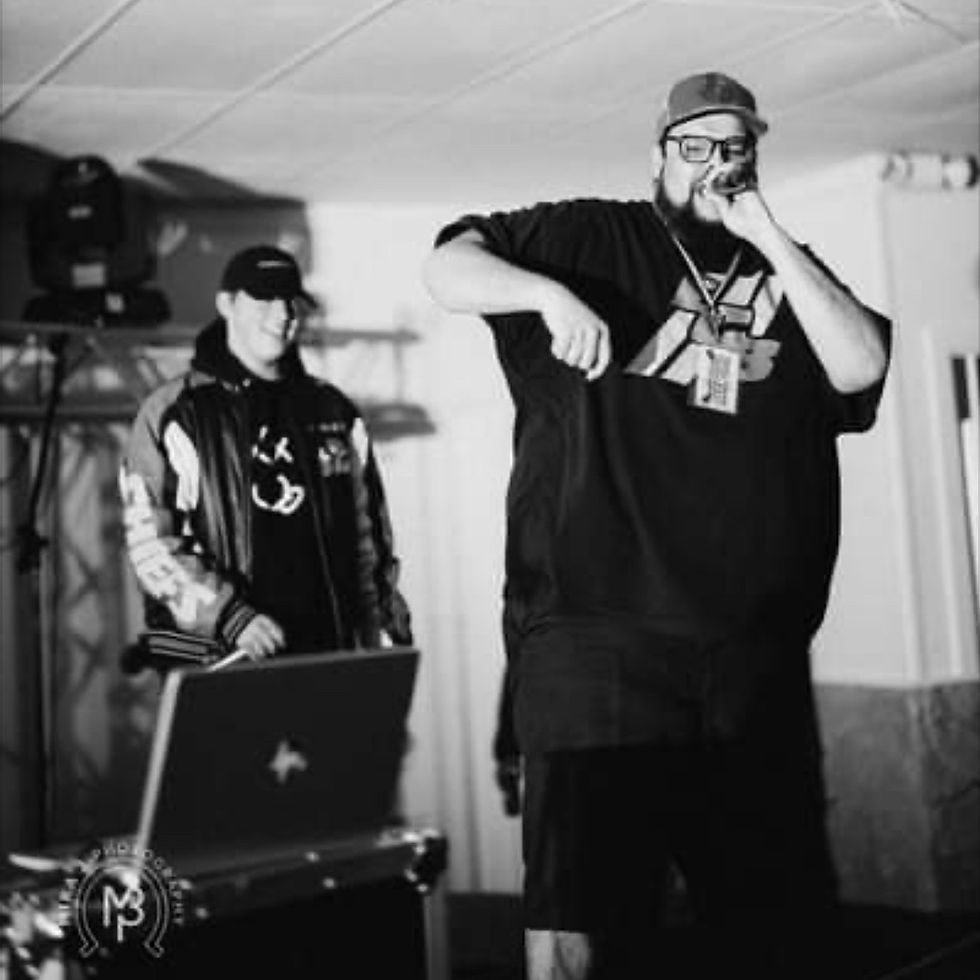
A decade ago, Kansas-born poet Nicholas Grooms was finding more acclaim as an active hip-hop artist who was unknowingly keeping poetry simmering on the backburner. With stints on the Vans Warped Tour, multiple viral videos and opening slots with artists such as Snow The Product, Inspectah Deck, Nappy Roots, Sadistik, Grieves and a four-year tenure of creating songs for the Kansas City Chiefs organization, it’s more than fair to say Grooms didn’t quite have poetry on his radar. With the passage of time, living through Covid, the birth of his children and many changes in boundaries and lifestyle that have turned him into a homeschool teacher and stay-at-home parent, Grooms returned to poetry and performing after a long hiatus and with it came a renewed calling. Whether it’s reading to classrooms of children, donating his time to mentorship, or using his shows and performances to raise money for local food banks and charities, Grooms’ aim is to leave things better than he found them in any place he goes, proving that poetry extends much farther than putting words onto a page to be enjoyed. It can pave the way for lasting acts of goodwill and humanity that reach far beyond the poetry community.
Q: What first drew you to writing, and what has kept you returning to it over time?
A: My mother is what initially drew me to writing. I would make up little stories and
situations for my action figures or imaginary battles. When I would recite these long epics, she would always tell me “Son, you’re going to be a great writer someday.” When I was 12, my best friend passed away after a long battle with leukemia and for a couple of months following his death, I was assigned to visit the school guidance counselor once a week to talk a bit and see how I was doing. When he realized that I didn’t really understand how to express how I felt, he asked me to write about it and I would write for the entirety of our time together. I found myself going home and writing more and more anytime anything in life felt burdensome. In high school, I found poetry in writing class and fell in love with the rawness of poets like Tricia Warden and Lemon Andersen. It was just a snowball effect with the written word. I can’t say I have had a case of returning to it, because since that period of time it’s been as constant in my life as breathing or my shadow following right behind me. I literally return to it many times a day.
Q: How do you know when an idea is worth pursuing on the page versus letting it go?
A: I tend to jot a lot of lines or short premises into notebooks or a file folder dedicated to just nuggets of ideas. I am not the type to sit down and exhaust a piece, I am more the “see an idea, feel the idea, expound upon the idea, if I hit a wall, move on and come back later” type of guy. Some poems are a long process and some I write in a sitting. I think there is value to all ideas, even if its purpose is just to get you to the next one. I think that’s why I’m a packrat when it comes to idea notebooks. Every time I view it, it is often with fresh eyes and whatever the mood of the day is.
Q: What role does experimentation play in your work? Do you find yourself pushing form, voice, or structure?
A: Voice. I am not a big proponent of rules or perfecting structure in how a piece looks or appears on paper, especially when the structure is there when I am speaking. I know how I read it live and the way I structure it on the page is a tidy embodiment of how I’d like you to read it in my voice. I have pieces that are more like skits than poems, I have pieces that sound more like free-verse hip hop or freestyle. I go to readings and slams with the mindset of “how can I stand out and be different?” I am a big believer in talking with your hands and using nuanced motions or tones, to further illustrate your work. When I was young, I was really into The Temptations and watched a made-for-TV movie where the actor playing Eddie Kendricks is teaching the rest of the group nuanced motions for a song to go along with their dances. When they hit the line, “you know you could’ve been some perfume…,” he acts out the motion of putting it on and that made something in my brain click. I have been working out ideas in performances ever since. Experimentation is everything and it keeps things forever fun and interesting. I live for those moments when I write something, and I plan it out and it hits exactly the way I intended. It’s a great rush of adrenaline when those moments occur.
Q: How do you approach beginnings in your writing? What makes a strong opening for you?
A: I think it should set up the piece and let you know it’s there, like a stiff jab starts a boxing match. A good line but not your best line. It should let you know the poet has power and you should watch out for the flurry that’s about to be fired at you. A lot of my opening lines or titles just come from jokes or funny things I have said to my family or friends in public, reacting to things I see. Or I start poems like a story and set you up for the rest. It seems to be a good formula when you want to build upwards, either way you go.
Q: What challenges you most in your writing practice right now?
A: (Laughs) Gosh, to put it simply, my children. I am homeschooling them and I am the stay-at-home/work-from-home parent in charge of their well-being all day long, so I write in between the chaos, the never-ending questions, and the constant interruptions. In a way, it’s paid dividends and I have gotten really good at mentally blocking out noise to finish reading or speaking a line through rowdy kid noise. If you go back and watch that “Poetry (in Brief)” reading we both did, there is a point where even on mute, you can tell I am trying to look over the laptop and tell my son to leave the room as he frantically asks me to put a robot's missing arm back on. I love them dearly, but god, what a bunch of thought blocks! I joke, but I am also so proud of them. The most rewarding thing in writing for me is the moment an author copy of a zine shows up in the mail, or something I just printed comes out and they want to hold it and be excited. “Dad! That’s you! That’s your picture! You wrote that!” They bring so much joy on those days and any time I get to look out and see them when I’m performing, I can just see core memories worn on their happy faces. There is nothing like your kids being proud of you…nothing in the world!!!

Q: How do you balance intuition and intention when shaping a piece?
A: I think that’s a hard one to explain because I don’t really ever think about it anymore. I feel like, over time, it’s like anything else. If you’re a chef, in the beginning you followed something of a recipe and along the way you found your own flavors and a style in which you do things. You’ve tasted your work when it was too bland, when it was too salty, when you overcook it and eventually you just perfect your way of doing it. I feel like repetition and lots of trial and error eventually just blend intention and intuition. No one knows yourself like you do, after all. And if you don’t, poetry will check you on self-awareness in a hurry.
Q: In what ways has your perspective as a writer shifted recently, if at all?
A: I have hit a real lull in submitting things lately as I watch things in the world unfold and sink deeper into violence and division. It just feels wrong to be focused on using my energy to champion myself in times where kids all over the world are being murdered by bombs, being trafficked, or being locked away in detention centers. My writing has been a little out of the norm lately and gotten a little more politically charged and more aggressive without boundaries. Most of my recent publications have come in the form of resistance poetry or “for a cause” publications that are raising money for people in need or people affected by what is happening all over the globe. My mental health and how I view things on any particular day is what drives the vehicle of what I am wanting to write and, lately, I feel like I have been a little bit off in that way. It’s been a lot of woe and anxiety manifesting into angry poetry. But in the storm, there is always somewhere to get out of the rain, especially in poetry. It has been nice to find a little peacetime in publications like this, or with my monthly West Pecan poetry group where I can focus on something beautiful and not find myself angry with a pen in my hand trying to solely be the change. I absolutely loved the challenge of coming up with pieces for this issue and getting to look over so many great works of art while doing so. It was incredibly therapeutic.
Q: Why are art and its history important?
A: It’s important to always hold the arts in high regard, especially now that AI has been rolled out, offering a fast-food type of substitute for real art. I already have friends I have to bite my tongue around who spend all day making photos of themselves on AI or showing me abysmal poetry they created and they don’t realize what a slap in the face it is to those of us who have spent years putting everything into this, just to have an often incorrect robot scribble down a few things that sort of sound like a poet would say. Support your friends, buy their books, buy their prints, commission their art. Do your community a great service and pay attention to those city meetings where you can have your voice heard in the name of funding art programs or preventing AI centers from being placed in your neck of the woods. I can think of no better way to respect the arts than delivering blows to those responsible for watering them down.

Nicholas Grooms has most recently released a full collection of poetry entitled “My Mental State Has a Midwest Shape,” through his own imprint, Most Crucial Media. He also has a red-hot chapbook, “Estranged Things,” that was released via Crying Heart Press that has since sold out all of its printings. He has most recently appeared in the “Voices of West Pecan,” “Love in D Minor,” and “An Anthology Against Hate” anthologies as well as zines, such as “Peruse,” “Apocalypse Confidential,” “Suburban Witchcraft,” and “Ionosphere,” in which he received a Pushcart nomination for his poem, “How Do You Walk a Walkman?
You can follow Nicholas Grooms on Instagram @nicholasgroomsraps where he’s always ready to receive good album and coffee-bean recommendations.


Comments